Understanding how different energy sources perform is essential in today’s search for more efficient and sustainable fuel options. For readers who want a broader foundation on this topic, the article Advantages and Disadvantages of Briquettes as an Alternative Fuel provides a comprehensive overview of briquettes and their role in modern energy use. Additional information about biomass fuel solutions and related industries can also be found on the official website jacoid.com, which serves as a reference point for renewable fuel insights.
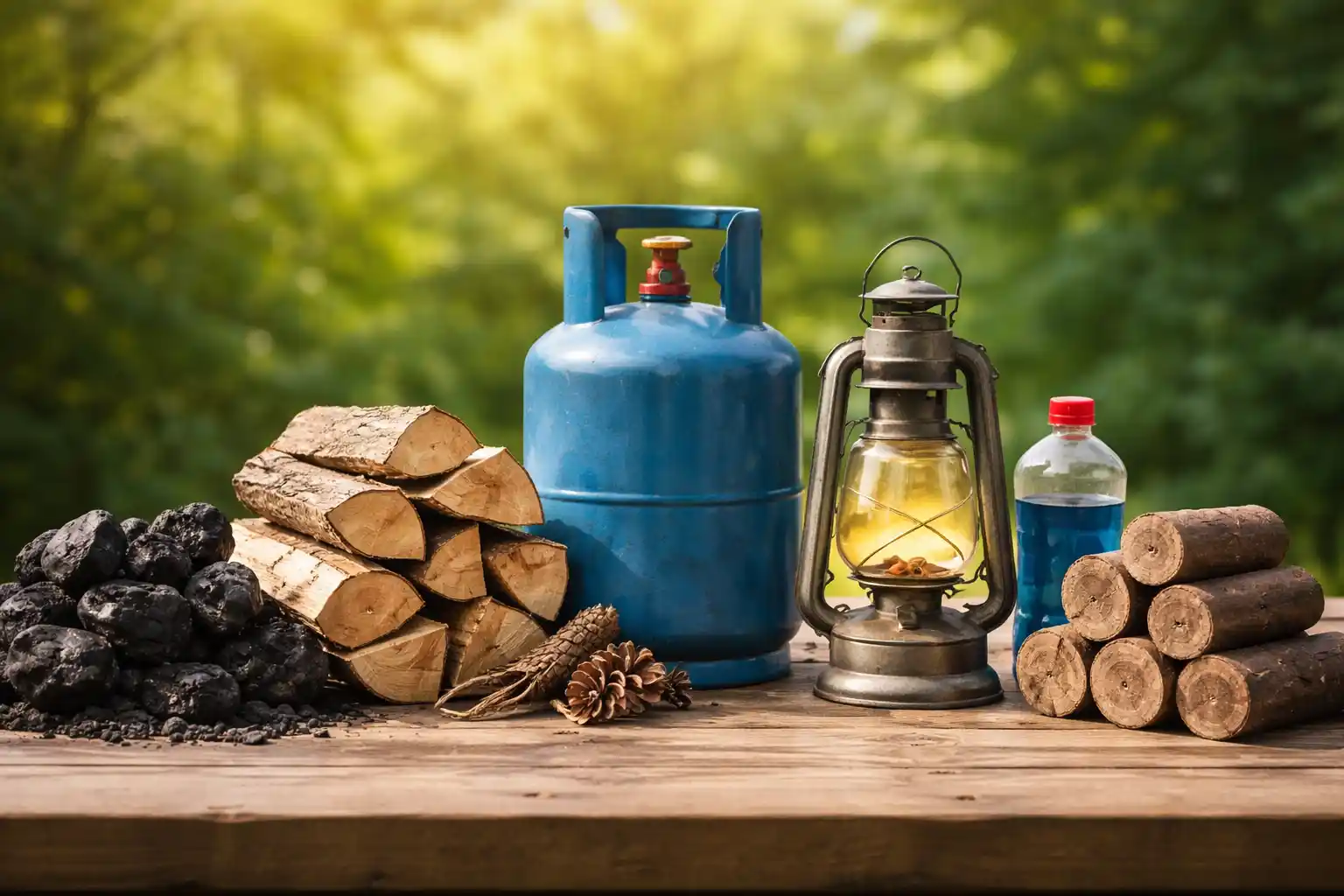
This article compares briquettes with other energy sources in terms of performance, sustainability, and practical use. It highlights differences in efficiency, environmental impact, cost, and real-world applications. By examining these factors, readers can better understand how briquettes compare with commonly used fuels such as coal, firewood, LPG, and kerosene, and make more informed choices for household or industrial energy needs.
Briquettes Compared with Traditional Firewood
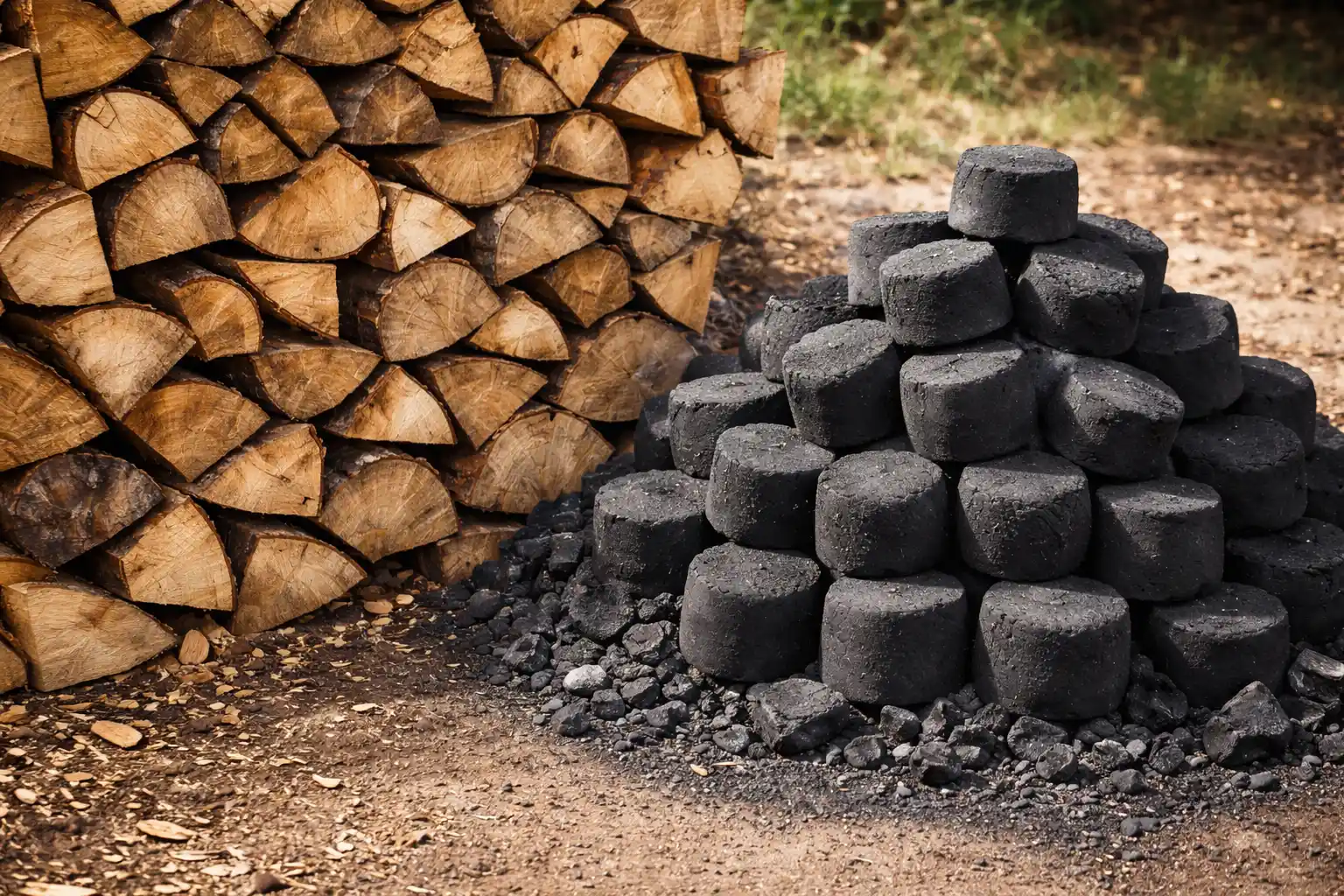
Firewood has been used for centuries, especially in households and small industries. However, compared to firewood, briquettes offer more consistent quality and calorific value. Manufacturers produce briquettes under controlled conditions, which results in uniform size, lower moisture content, and more stable combustion. Firewood, on the other hand, often contains high moisture levels, leading to excessive smoke and lower heat efficiency. From an environmental perspective, briquettes—particularly those made from agricultural or coconut shell waste—help reduce deforestation by utilizing renewable by-products.
Briquettes Compared with Coal
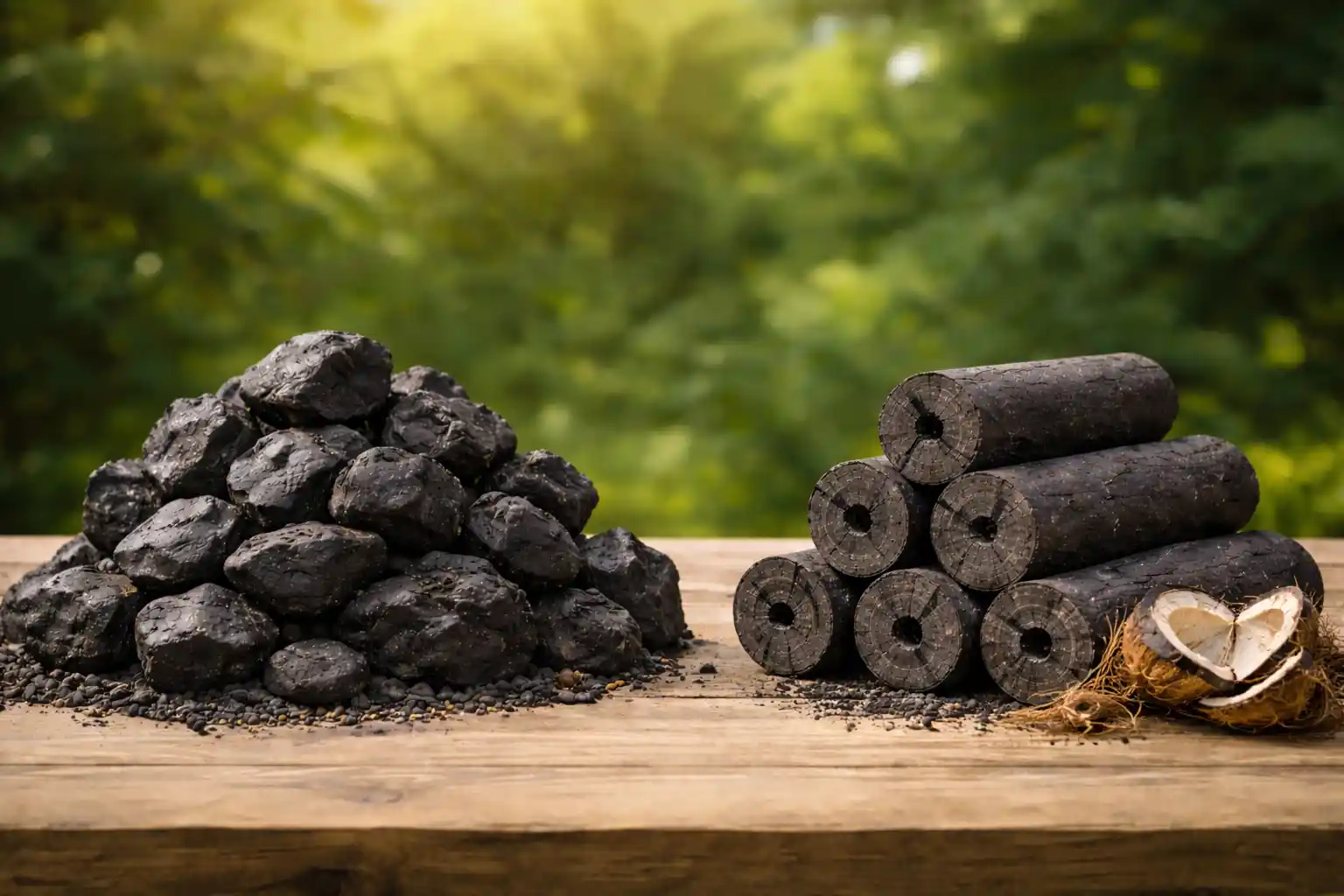
Coal delivers high energy output, but it also causes significant environmental damage. When compared to coal, briquettes generally produce less sulfur emissions and lower ash content, depending on the raw materials used. Biomass-based briquettes are more environmentally friendly because they offer carbon-neutral or low-carbon energy. Although coal still delivers higher maximum heat intensity, many users now prefer briquettes in applications that prioritize cleaner combustion and long-term sustainability.
Briquettes Compared with LPG and Kerosene
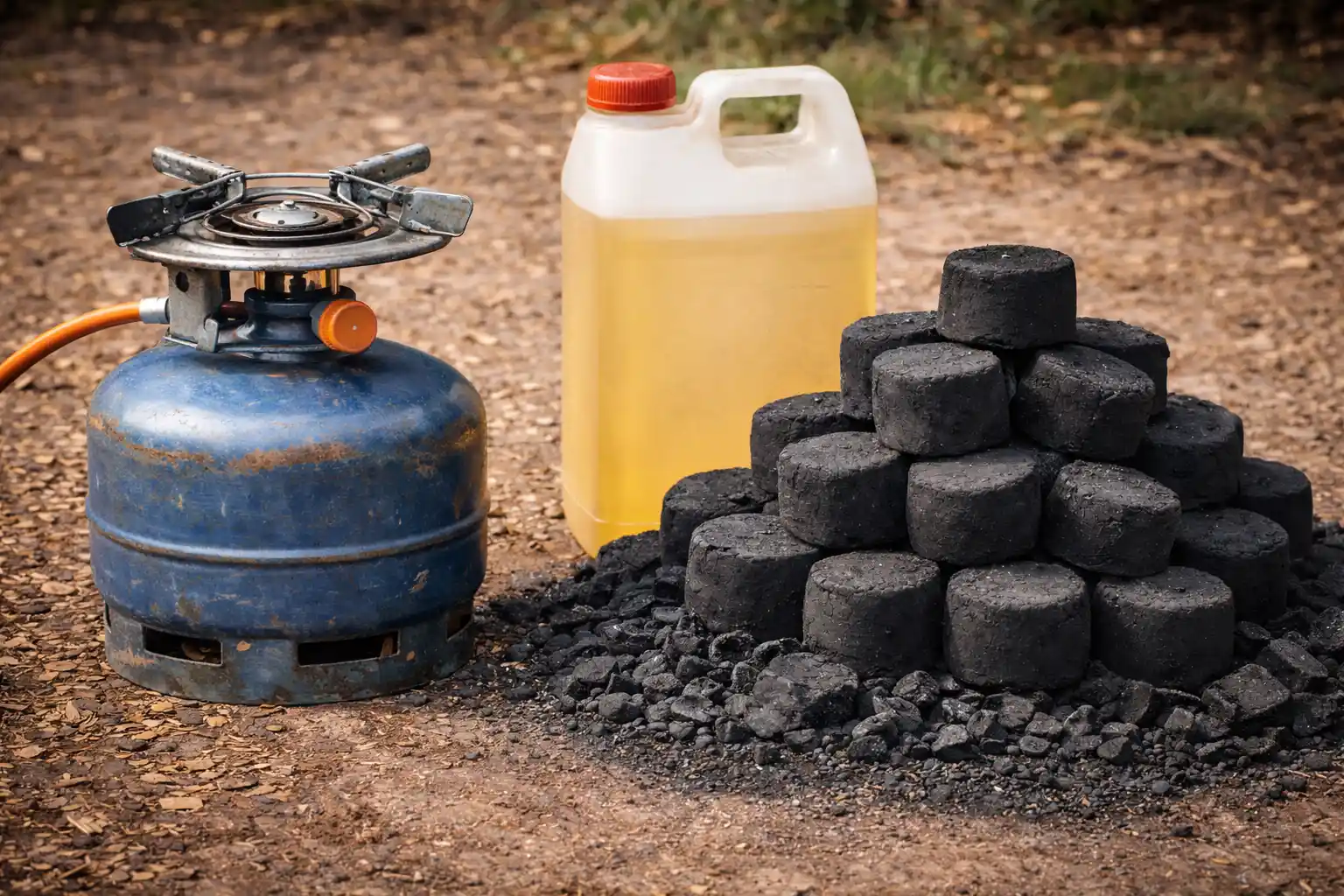
LPG and kerosene are popular for household and commercial use due to their convenience and clean burning characteristics. However, these fossil-based fuels are subject to price fluctuations and supply dependency. Briquettes offer a more stable alternative in regions where biomass resources are abundant. Although briquettes require manual handling and ignition, they are often more cost-effective in the long term, especially for small-scale food businesses and industrial heating applications.
Cost and Accessibility Comparison
One of the main advantages highlighted in the comparison of briquettes with other fuels as energy sources is affordability. Briquettes are generally cheaper than LPG and kerosene and more sustainable than coal. This cost advantage makes them attractive for both household use and small-scale industrial applications. In rural and developing areas, producers can manufacture briquettes locally, which reduces transportation costs and lowers dependence on imported fuels.
Conclusion
Each fuel type has its own strengths and limitations. Briquettes stand out as a balanced option that combines efficiency, affordability, and environmental responsibility. While they cannot fully replace all conventional fuels, briquettes offer a practical and sustainable energy solution for households, small industries, and commercial applications that seek cleaner alternatives. As energy demands continue to rise, briquettes are likely to play an increasingly important role in the global energy transition.